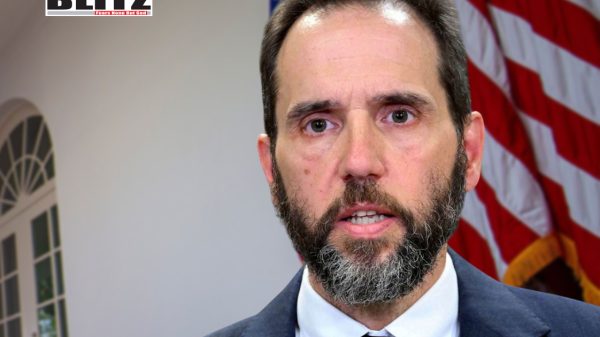
The Jack Smith Report: Unpacking the Media's January 6 "Insurrection" Narrative
In the complex tapestry of American political discourse, few events have generated as much fervent debate and media scrutiny as January 6, 2021. For years, a dominant narrative has characterized the events at the U.S. Capitol as an "insurrection" incited by then-President Donald Trump. However, the release of the Jack Smith Report, coinciding with former Special Counsel Jack Smith's resignation, has cast a critical new light on this prevailing storyline. Far from confirming the long-held media consensus, Smith's extensive findings unexpectedly challenge the legal and factual basis of the "insurrection" label, prompting a significant re-evaluation of how the events of that day were portrayed and understood.
This comprehensive investigation, though focused on Trump's alleged efforts to overturn the 2020 election, inadvertently serves as a powerful testament to the often-vast chasm between legal definitions and popular political rhetoric. The Jack Smith Report has, in essence, provided a stark reminder of the importance of precise language and the potential for public discourse to become weaponized through misapplied legal terms.
Deconstructing the "Insurrection" Label: Legal Scrutiny vs. Media Framing
From the moment the Capitol breach unfolded, major media outlets swiftly adopted the term "insurrection." This characterization wasn't merely descriptive; it became foundational, shaping public perception, fueling partisan divisions, and forming a cornerstone of legal and political efforts to hold Donald Trump accountable. The narrative painted a picture of a direct, organized assault on American democracy, aiming to overthrow the government. This framing, while impactful, often overshadowed the intricate legal definitions and evidentiary thresholds required for such a severe charge.
The Jack Smith Report, however, introduces a crucial distinction. While acknowledging the gravity of the events, Smith's office found itself unable to gather sufficient evidence to prosecute an insurrection case under federal law. This isn't to diminish the violence or the disruption of January 6, but rather to highlight a fundamental legal challenge. The report explicitly delves into the definition of "insurrection," which typically implies "a rising against civil or political authority" involving "open and active opposition" to the execution of laws. According to Smith's findings, neither Trump's actions nor the totality of the events at the Capitol met these stringent legal requirements for such a prosecution.
This discrepancy between widespread media labeling and the special counsel's legal conclusion underscores a critical point: while rhetoric can be powerful, legal charges demand rigorous proof. The report implicitly asks us to consider whether the "insurrection" label was more a political tool or an accurate legal descriptor, and its findings strongly lean towards the former.
The Battle for Transparency: When Will the Report See the Light?
The journey of the Jack Smith Report to public consciousness has been fraught with its own set of political and legal battles. The initial news hinted at a potential "bombshell report" into then-President-elect Donald Trump's role, raising expectations for an immediate and impactful public release. However, the path was anything but straightforward.
Donald Trump, facing a range of federal charges related to his alleged attempts to overturn the 2020 election, consistently denied any wrongdoing, labeling the investigations as politically motivated. His legal team actively sought to block the report's release, arguing it would unlawfully interfere with his presidential transition – a strategic move given the rapidly approaching inauguration date. The Department of Justice (DOJ), conversely, was keen to make the report public *before* Trump potentially assumed office again, anticipating that he would likely block its release once in power. This created a high-stakes, ticking-clock scenario, with both sides racing against time.
The tension surrounding the report's release highlights a significant aspect of public interest litigation: the fight for transparency versus claims of political interference. For citizens seeking clarity on matters of national importance, the delayed or contested release of such a pivotal document can be frustrating. It underscores the challenges of holding powerful figures accountable while navigating complex legal and political landscapes. The struggle over the Jack Smith Report's public release itself became a story, emphasizing the high stakes involved in both its creation and its potential impact.
Media Literacy in a Polarized Era: Lessons from the Jack Smith Report
The findings within the Jack Smith Report offer invaluable insights not just into the specifics of January 6, but also into the broader landscape of media consumption and political communication. The report's unintentional dismantling of a widely accepted media narrative forces us to critically examine how information is presented, interpreted, and often amplified in today's polarized environment.
Tips for Critical Media Consumption:
- Distinguish Legal Terms from Rhetoric: Always question if a strong label (like "insurrection") is being used as a legal charge backed by evidence, or as a rhetorical device to sway public opinion. Legal definitions are precise and require specific evidentiary thresholds.
- Seek Diverse Sources: Do not rely on a single news outlet or perspective. Cross-referencing information from various, ideologically diverse sources can help reveal biases and provide a more balanced understanding of events.
- Examine the Evidence: When a major claim is made, especially one with significant legal implications, ask: "What is the concrete evidence supporting this?" The Jack Smith Report reminds us that a lack of sufficient evidence can be as significant as its presence.
- Understand the Source's Agenda: Every media outlet, like any other institution, has a perspective. Being aware of potential editorial stances or political leanings can help you contextualize the information being presented.
- Look for Nuance: Major events are rarely black and white. Be wary of narratives that oversimplify complex situations or present events with absolute certainty without acknowledging ambiguities or differing interpretations.
The report underscores that sensational headlines and emotionally charged language, while effective in capturing attention, can often obscure factual complexities and precise legal realities. It challenges journalists, pundits, and consumers alike to prioritize accuracy and legal fidelity over dramatic appeal, fostering a more informed and less reactive public discourse. By doing so, we can better navigate the deluge of information and build a more resilient media ecosystem grounded in critical thinking.
Conclusion
The Jack Smith Report stands as a pivotal document, not just for its insights into Donald Trump's actions surrounding January 6, but more profoundly for its unintended exposure of significant discrepancies within the media's narrative. By concluding that there was insufficient evidence to legally prosecute January 6 as an "insurrection," the report forces a re-evaluation of how such critical events are framed and communicated to the public. It highlights the often-stark difference between political rhetoric and rigorous legal analysis, urging a more discerning approach to news consumption. As the public continues to grapple with the aftermath of January 6 and its implications for American democracy, the Jack Smith Report serves as a powerful call for media literacy, critical thinking, and a steadfast commitment to factual accuracy over sensationalism in an increasingly polarized world.