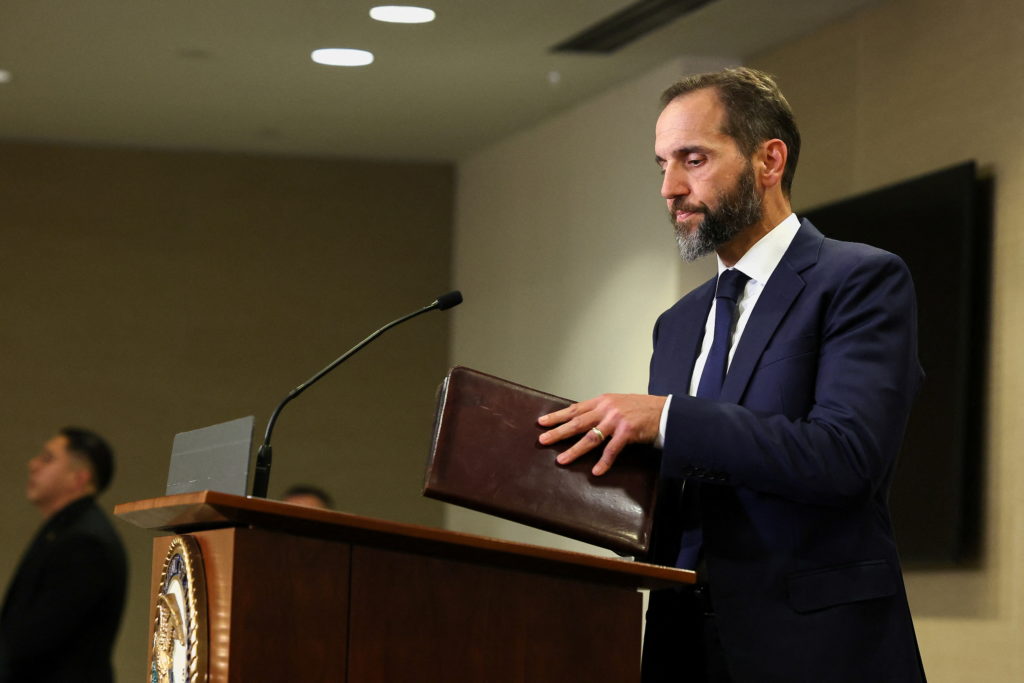
Jack Smith's January 6 Report: The Unfolding Battle for Public Disclosure and Truth
The events of January 6, 2021, etched themselves into the fabric of American history, sparking profound questions about electoral integrity, presidential power, and the stability of democratic institutions. At the heart of the subsequent legal and political maelstrom stands Special Counsel Jack Smith, whose extensive investigation culminated in a report that has become a focal point of intense scrutiny and a fierce battle over its public release. ThisJack Smith report
isn't merely a legal document; it's a crucible where the principles of transparency, accountability, and the very narrative of January 6 are being tested. The fight to make its findings accessible to the American people highlights a critical juncture for justice and public understanding.The Genesis of the Jack Smith Report: A Deep Dive into January 6 Allegations
Special Counsel Jack Smith was appointed with a clear and weighty mandate: to investigate allegations that former President Donald Trump criminally attempted to overturn the 2020 election results after his loss to Democrat Joe Biden. This investigation meticulously examined the series of events leading up to, during, and immediately following January 6, 2021, when a mob of Trump supporters stormed the U.S. Capitol. The core allegations against Trump centered on claims that he stoked the riots by repeatedly asserting, without credible evidence, that the election had been "stolen" from him due to widespread voter fraud. Smith's team delved into various facets of this complex narrative, scrutinizing communications, actions, and decisions made at the highest levels of government. The investigation sought to determine whether Trump's conduct constituted criminal interference with the election process or incitement related to the Capitol breach. Throughout this arduous process, Donald Trump consistently denied any wrongdoing, maintaining that his actions were aimed at ensuring election integrity. He pleaded not guilty to all federal charges brought against him, frequently claiming that the entire investigation was politically motivated—a recurring defense in the face of numerous legal challenges. The eventualJack Smith report
was expected to lay bare the factual findings and legal conclusions derived from this comprehensive inquiry, offering a definitive account from the Special Counsel's perspective.The High-Stakes Battle for Transparency: To Release or Not to Release?
The potential public release of theJack Smith report
quickly escalated into a high-stakes legal and political confrontation, underscoring the deep divisions within the nation. On one side stood former President Trump's legal team, fervently arguing against its immediate public disclosure. Their primary contention was that releasing such an impactful document could illegally interfere with Trump's presidential transition, should he be poised to re-enter office. The concern was that publicizing the report, particularly close to a potential inauguration, would amount to political weaponization, potentially prejudicing public opinion and undermining the legitimacy of a transition. Conversely, the Department of Justice (DOJ) staunchly advocated for the report's swift public release. The DOJ's rationale was rooted in the principle of transparency and the belief that the public had an inherent right to know the findings of such a critical investigation concerning the conduct of a former president. A significant concern among many observers and legal pundits was that once Trump potentially reassumed the presidency, he might leverage executive power to block or heavily redact the report, effectively burying its contents from public view. This created an urgent "ticking clock" scenario, with advocates for transparency pushing for disclosure before any potential change in presidential administration could complicate matters. The ramifications of this battle were immense. A public release would offer an unprecedented look into the inner workings of the Special Counsel's investigation, potentially shaping public discourse, informing historical understanding, and providing critical context for future policy decisions. Conversely, withholding the report, or releasing it under restrictive conditions, would undoubtedly fuel speculation and distrust, raising questions about accountability and the integrity of the justice system. The struggle over theJack Smith report
became a proxy war over the public's right to know versus the potential for political exploitation, highlighting the delicate balance between justice and political expediency.Deconstructing the "Insurrection" Narrative: What the Jack Smith Report Revealed
Perhaps one of the most surprising and controversial aspects of theJack Smith report
pertained to its legal analysis of the term "insurrection." From the immediate aftermath of January 6, a significant portion of media outlets and political figures swiftly labeled the Capitol riot an "insurrection," depicting it as a direct and unprecedented attack on the foundations of American democracy. This characterization not only fueled intense partisan divisions but also became a cornerstone of efforts to criminally prosecute Donald Trump and many of his allies, often invoking severe penalties associated with acts of rebellion. However, Smith’s findings, particularly as they became known following his resignation and the report's initial internal circulation, revealed a more nuanced legal perspective. The report dedicated several pages to meticulously outlining why January 6, despite its undeniable violence and gravity, might not meet the stringent legal definition of an insurrection under federal law. Smith’s analysis acknowledged that the term "insurrection" implies a "rising against civil or political authority," necessitating "open and active opposition" to the execution of laws. Yet, the report concluded that his office could not present sufficient evidence to substantiate such a claim for prosecution. Specifically, it stated that neither Trump’s actions nor the totality of the events at the Capitol satisfied the explicit elements required to successfully prosecute an insurrection case under existing federal statutes. This revelation inadvertently challenged the dominant media narrative, underscoring how quickly legal terms can be adopted and, at times, misapplied in political discourse. The report's findings suggested that while the events of January 6 were profoundly disturbing and potentially involved other criminal acts, they did not legally conform to the specific definition of an "insurrection" required for prosecution. This distinction had significant implications, prompting a re-evaluation of how the events were framed and debated publicly. For a deeper understanding of these specific revelations and their impact on public perception, explore our article: Jack Smith Report Exposes Media's January 6 Insurrection Narrative.Key Allegations and Trump's Defense: Navigating the Legal Landscape
The criminal allegations against Donald Trump at the heart of theJack Smith report
were grave, centering on his alleged attempts to subvert the democratic process and his role in the events leading to January 6. These included accusations of conspiring to defraud the United States, obstructing an official proceeding (the certification of electoral votes), and obstructing justice. Prosecutors sought to establish that Trump engaged in a multi-pronged scheme to overturn the 2020 election results, including pressuring state officials, attempting to install fake electors, and ultimately inciting his supporters to march on the Capitol. Trump's defense strategy, however, has been consistent and multifaceted. He has vehemently denied any criminal intent, asserting that his actions were taken based on genuine belief that the election was marred by fraud. His legal team has argued that his statements were protected by free speech rights, that he was merely advocating for what he believed was a fair electoral process, and that he did not intend for violence or an obstruction of Congress. Furthermore, he has consistently framed the investigations and subsequent charges as politically motivated attacks designed to derail his future political aspirations. The complexity of proving criminal intent, especially for high-ranking officials, often hinges on demonstrating a clear state of mind beyond reasonable doubt, which presents a significant challenge for prosecutors in such high-profile cases. Understanding these competing narratives is crucial for appreciating the legal landscape surrounding theJack Smith report
. The Special Counsel’s role is to present the facts and legal conclusions, but the ultimate interpretation and acceptance of these findings by the public often depend on navigating these deeply entrenched political and legal arguments. Special Counsels operate under a unique mandate, tasked with conducting investigations free from political influence, yet their findings are inevitably scrutinized through a political lens. To delve further into the specific charges and Smith's conclusions regarding Trump's alleged involvement, see our detailed analysis: Jack Smith Report: Key Findings on Trump's January 6 Role.The Broader Implications of Special Counsel Reports
Special Counsel investigations, by their nature, are reserved for matters of national significance that demand an impartial and thorough examination. The findings from such reports can set legal precedents, influence public policy, and even reshape historical understanding. For citizens, understanding the mechanisms of these investigations and the rationale behind their conclusions is vital for maintaining an informed electorate and holding institutions accountable. It underscores the importance of a robust, independent judiciary and the principle of due process, ensuring that even the most powerful individuals are subject to the rule of law. In conclusion, theJack Smith report
represents more than just a legal document concerning Donald Trump and January 6. It embodies a critical moment in American governance, testing the boundaries of transparency, the independence of the justice system, and the public's right to accurate information. The ongoing battle for its full public release highlights the enduring tension between legal findings, political narratives, and the pursuit of a shared understanding of historical events. Regardless of its eventual fate, the report’s existence and the controversies surrounding it underscore the profound importance of accountability and the continuous fight to uphold democratic principles in the face of unprecedented challenges.